
Bed bugs
Everything You Need to Know!
Do you wake up with itchy bites and suspect you have bed bugs? Learn here how to identify an infestation, where these parasites prefer to hide, and how to effectively combat them – with home remedies or professional support from Thermo-bug®.

What Are Bed Bugs?
Bed bugs (Cimex lectularius) are wingless, reddish-brown insects with flattened bodies. As adults, they grow to about 4–5 millimeters long (up to 9 mm after a blood meal) and have no wings.
They live exclusively indoors and feed on human blood, which they draw at night. After feeding, they return to dark hiding places. Bed bugs are considered particularly bothersome because their bites cause severe itching, and an infestation in one’s own home can lead to significant psychological distress. While current knowledge indicates that bed bugs do not transmit diseases, their bites can irritate the skin, and scratching can promote infections. Therefore, a bed bug infestation is not only unpleasant but often a major stress factor for those affected.
The Resurgence of Bed Bugs
In recent years, the global spread of bed bugs has increased significantly. Previously, they played a minor role after the use of effective insecticides, but today, increasing travel activity and international trade in used goods are primarily responsible for their proliferation. A single fertilized female in luggage or used furniture is enough to trigger a new infestation. Experts also attribute the resurgence of bed bugs to resistance against common chemicals. The bugs can survive for months without a blood meal, meaning unoccupied rooms can remain contaminated for extended periods. Therefore, an infestation can affect any household – even a clean one.
How Do Bed Bugs Spread?
Bed bugs usually enter homes unnoticed. Typical sources include:
Luggage
Guests in hotels or vacation rentals often bring bugs in their luggage, which can then nest in mattresses and bed frames.
Second-hand Furniture & Clothing
Used beds, sofas, or clothing from flea markets or online marketplaces are also common routes of transport.
Walls & Conduits
In very severe infestations, bed bugs can even spread to neighboring apartments via walls and conduits.
Simple hygiene measures alone can hardly prevent an infestation, as bed bugs require neither dirt nor clutter. Despite regular cleaning, they can remain unnoticed. However, avoid unnecessary introduction: preemptively inspect hotel rooms, clothing, and used furniture for traces. Look for signs such as small black spots (feces) or empty molts.
How to Identify a Bed Bug Infestation?
Bite Patterns
Noticeable signs include itchy, reddened welts or pustules on the skin, which usually appear in rows (“bed bug trails”) or clusters. The reaction varies individually; some people show hardly any symptoms.
Fecal and Blood Stains
Rust-brown blood stains (from crushed bugs) and black, powdery spots (fresh fecal traces) are often found on mattresses, bed linen, or furniture.
Molted Skins and Eggs
Transparent, empty bug molts (from molting) as well as tiny, white eggshells are often discovered in or around the bed, in crevices or on the backs of furniture.
Characteristic Odor
In heavily infested rooms, there is sometimes a sweetish smell, like bitter almonds – a scent emitted by bed bugs.
Unsure?
Do I have bed bugs?
Upload photos of the infestation now and we will estimate within a few days what type of pest infestation you have:
Get pests identified nowWhere Do Bed Bugs Hide?
During the day, these insects primarily stay in quiet, protected places. Popular hiding spots include, for example:
Mattress and Slatted Frame Crevices
In the bed, especially in dark areas at the headboard, bed frame, bed linen
Furniture, devices, electrical outlets, and books in and around the bed
Upholstered Furniture
Baseboards
Cabinet Back Panels
Any Cracks, Crevices
They are often only noticed when specifically searched for or when a more severe infestation is present. Bed bugs emerge from their hiding places at night to feed and then return during the day to conceal themselves in their shelters.
Life Cycle and Implications for Control
Bed bugs undergo a typical life cycle with egg, five larval, and an adult stage. A female lays up to 350–400 eggs during her lifetime, usually glued in groups in crevices. The approximately 1 mm long, white eggs hatch after about 12 days at room temperature.
The newly hatched nymphs initially appear light and transparent, darkening with each molt. They must take blood meals between each of the five stages to grow; no further development occurs below 13°C. Under favorable conditions (e.g., ~22–27°C), it takes about 8 weeks from larva to adult insect. Adult bed bugs are 4–7 mm long and can live for 6–18 months under optimal conditions. If bugs do not obtain a blood meal for an extended period, they can survive for several months without food.
The newly hatched nymphs initially appear light and transparent, darkening with each molt. They must take blood meals between each of the five stages to grow; no further development occurs below 13°C. Under favorable conditions (e.g., ~22–27°C), it takes about 8 weeks from larva to adult insect. Adult bed bugs are 4–7 mm long and can live for 6–18 months under optimal conditions. If bugs do not obtain a blood meal for an extended period, they can survive for several months without food.
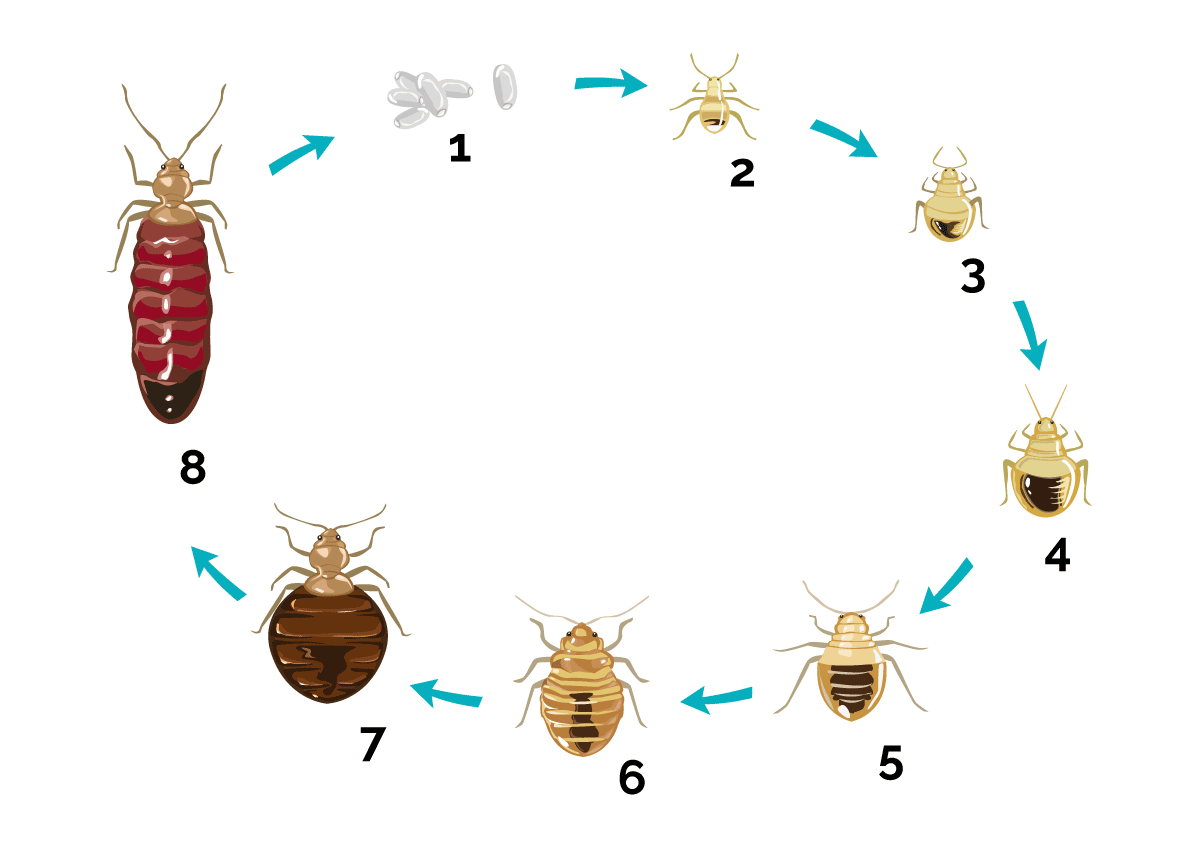
This life cycle is crucial for control: only when all stages – especially the resilient eggs – are killed, will the infestation permanently cease. Eggs are extremely resistant to chemicals, which is why conventional spray treatments often need to be repeated multiple times. A major advantage of heat treatment with Thermo-bug® is that it targets all developmental stages. According to studies, just 30 minutes at approximately 45°C is sufficient to reliably kill all bed bugs, including eggs. Thermo-bug® therefore heats rooms to high temperatures (50–70°C) for about 1 hour, thus eliminating the parasites in one go.
What Are the Effects of Bed Bugs?
Bed bug infestations burden those affected both physically and psychologically.
Skin Reactions
The bites, especially on the arms, legs, and face, usually itch severely and can cause redness and welts.
Allergic Reactions
Particularly sensitive individuals may react more strongly to bed bug bites, which can lead to hives, eyelid swelling, or even allergic asthma.
Secondary Infections
Scratching the bite areas can create wounds that may become inflamed and infected.
Stress & Anxiety
An infestation often leads to sleep disturbances and anxiety: affected individuals report insomnia and constant restlessness. Many also perceive the use of insecticides in the bedroom as an additional imposition.
Isolation & Shame
In severe cases, the psychological burden can lead to social isolation or depression.
Financial Burden
In massive cases, bed bugs can contaminate mattresses, bed linen, carpets, and upholstered furniture. In some instances, infested furniture must be disposed of or professionally cleaned, incurring costs.
Typically, the bites are harmless, and bed bugs do not transmit diseases. Nevertheless, many people find the idea of being infested by blood-sucking parasites extremely repulsive. Generally, the longer a bed bug infestation remains unnoticed, the more bothersome and expensive its elimination becomes; therefore, early action is crucial!
How to Prevent Bed Bugs?
Travel Precautions
When you travel, do not place your suitcase on the bed or floor – use luggage racks or elevated surfaces. Inspect hotel rooms upon entry for traces (e.g., black spots, molted skins). After your trip, clean or wash your luggage and clothing before putting them in the closet.
Diligence When Purchasing Furniture
Examine used beds, sofas, and furniture in detail for signs of bed bug infestation (fecal spots, eggs, molts). If a sign is present, tightly package the furniture – if possible – (e.g., in a sturdy plastic bag), treat it by freezing or heating, and immediately remove it from your home if the issue is not remedied. Clearly mark infested items to prevent unwanted further spread.
Inspection and Hygiene
Keep living and sleeping areas tidy to more easily detect early traces. Change bed linen regularly and wash it at high temperatures. Protect your mattresses with encasement covers and occasionally check their seams.
Awareness
Familiarize yourself with the appearance and habits of bed bugs (e.g., typical hiding places). Early detection is the best protection against widespread infestation.
When Is an Infestation Subject to Reporting?
No Reporting Obligation
The legal regulation does not stipulate a reporting obligation for bed bug infestations, as they do not transmit diseases that would trigger a reporting obligation under the IfSG.
However: It is advisable to inform neighbors (especially in multi-family homes/apartments), landlords, or property management so that, if necessary, entire floors can be inspected to prevent possible further spread. Joint control prevents constant reintroduction. .
How to Combat Bed Bugs?
There are various strategies to combat bed bugs – each with its advantages and disadvantages.
Home remedies
Many measures can bring initial success but are usually only of limited effectiveness. These include, for example:
Heat
Use a washing machine and dryer at ≥60°C for bed linen or textiles, an oven (with caution), or a steam cleaner to heat smaller items. Bed bugs cannot tolerate temperatures above 50°C indefinitely. Sunlight (especially in a sealed plastic bag) can also generate >50°C in summer and kill bugs.
Cold
Small infested items can be isolated and frozen at –18°C for at least three days. Bed bugs do not survive temperatures of about –5°C over several days.
Vacuuming and Steam Cleaning
Direct contact through vacuuming or hot steam (both make hiding difficult) can kill or remove insects, but it does not replace a complete treatment.
Diatomaceous Earth
This natural powder dries out insects; it only works on contact and can therefore at best be used as a supportive measure.
Mattress Cover
Protective covers for mattresses and pillows (so-called encasements) trap bugs and prevent them from re-hiding in the bed.
Provisional Traps
Double-sided adhesive tape or special traps on bed legs can catch initial insects, but they do not replace a full treatment.
Chemical Methods
Insecticide sprays and powders (mostly pyrethroid-based, such as permethrin, possibly combined with insect growth regulators) are often used. They work through direct contact or residues in the hiding place and paralyze the insects. However, there is a high probability that not all bugs will be reached, and especially the eggs remain very resistant. Furthermore, bed bugs develop resistance to many common active ingredients. Therefore, chemical treatment should be carried out by a specialist company that can spray residues and, if necessary, perform multiple applications.
Professional control
Specialist companies offer specialized solutions:
Heat Disinfestation (Thermo-Disinfestation)
Powerful heating devices are used here. The affected room is heated to approximately 50–70°C, which kills all stages of the bugs. This method is odorless, non-toxic, and more sustainable than insecticides. After treatment, rooms can usually be re-entered immediately.
Cold Disinfestation (Dry Ice Method)
Some professionals use liquid CO₂ (dry ice), which kills bugs through rapidly falling temperatures.
Integrated Methods
Heat or cold are often combined with spot chemical applications to reach, for example, cold-tolerant bugs in deeper upholstery.
Inspection and Monitoring
Pest controllers conduct inspections before and after treatment and, if necessary, use sniffer dogs or lure traps to ensure success.
For all methods, the following applies: Successful control requires thorough preparation (taping, decluttering, creating access to hiding places) and monitoring. Only then can it be ensured that no bugs survive.
Effectively Combat Bed Bugs with Thermo-bug®
Thermo-bug® is a specialized device for chemical-free bed bug control through heat. It utilizes the heat disinfestation approach: the ambient air is specifically heated to very high temperatures, causing irreversible damage to proteins in all cells of the bugs.
In practice, this means: sustained temperatures of 45–55°C (for at least 30–60 minutes) cause even stubborn bed bug eggs to coagulate beyond survival. Depending on the setting, Thermo-bug® can heat rooms up to 70°C. The treatment is fast and quiet, leaves no harmful residues, and – if performed correctly – is 100% effective against all developmental stages.
Thermo-bug® also reliably kills all developmental stages (eggs, larvae, adult insects). Unlike many spray treatments, heat methods are immune to insect resistance. Overall, hoteliers benefit from a stress-free, effective pest control without toxins: Bed bugs as well as other pests are quickly rendered harmless, and hotel operations remain undisturbed.
Advantages of the Thermo-bug® method:
Effective & Fast
A heat treatment with Thermo-bug® usually only needs to be performed once, as it also kills eggs and is effective against all developmental stages (unlike many chemicals used in control).
Sustainable & Safe
No health-hazardous vapors or gases are produced, and the rooms can be used immediately afterward. Rooms can be treated with Thermo-bug® without hesitation for families with children, allergy sufferers, or pet owners, as only dry heat is used.
Guaranteed Safety
Continuous monitoring of safety-relevant parameters through independent circuits. Safety shutdown in case of overtemperature and a control program with integrated program sequence monitoring.
True Protection Through Professional Application
With correct application, no bug migrates to an adjacent room, as is often a concern with short-term heat treatments.
Thermo-bug® thus proves to be a sustainable, environmentally friendly, and highly effective solution for permanently and safely eliminating bed bugs.
Frequently Asked Questions (FAQs)
No, current research indicates that bed bugs do not transmit infectious diseases. Their bites typically result in harmless, yet intensely itchy, red marks. Allergic reactions or bacterial infections due to scratching are rare and generally not severe. The greatest risk is primarily psychological: sleep disturbances and stress caused by the awareness of an infestation can impair one’s quality of life.
The costs depend on the extent of the infestation and the chosen method. Mild cases are often treated for approximately €200–400, while for moderate infestations, costs typically range between €300 and €650. Severe or massive infestations may incur higher costs. Thermo-bug® applications are often cost-efficient because all stages are eliminated in a single step. Simple DIY measures (washing, vacuuming, emergency treatment) usually cost under €50.
A targeted heat treatment with devices such as Thermo-bug® requires preparation (access points, measurement points) and subsequent cooling. In total, approximately 6–8 hours may be necessary per room to maintain the temperature above 45°C and reach all hiding places. The application often extends over an entire day. Chemical spray treatments typically last only 1–2 hours per room but usually need to be repeated after a few days. Thermo-bug® can generally suffice with a single treatment, as all stages of the pests are targeted by the special Thermo-bug® technology.
Act now!
Stress-Free with Thermo-bug®
Do you want to permanently get rid of pests? Thermo-bug® offers you an effective, sustainable solution – completely without chemical toxins. Request a non-binding offer now and let our experts advise you. Use our contact form on the website or call us directly. Together, we will find the best strategy for your situation. With Thermo-bug®, you can rely on a proven method: fast, safe, and environmentally friendly.
Use Thermo-bug® NowThermo-bug® can do more than just bed bugs!
Learn how to identify and control various pests: